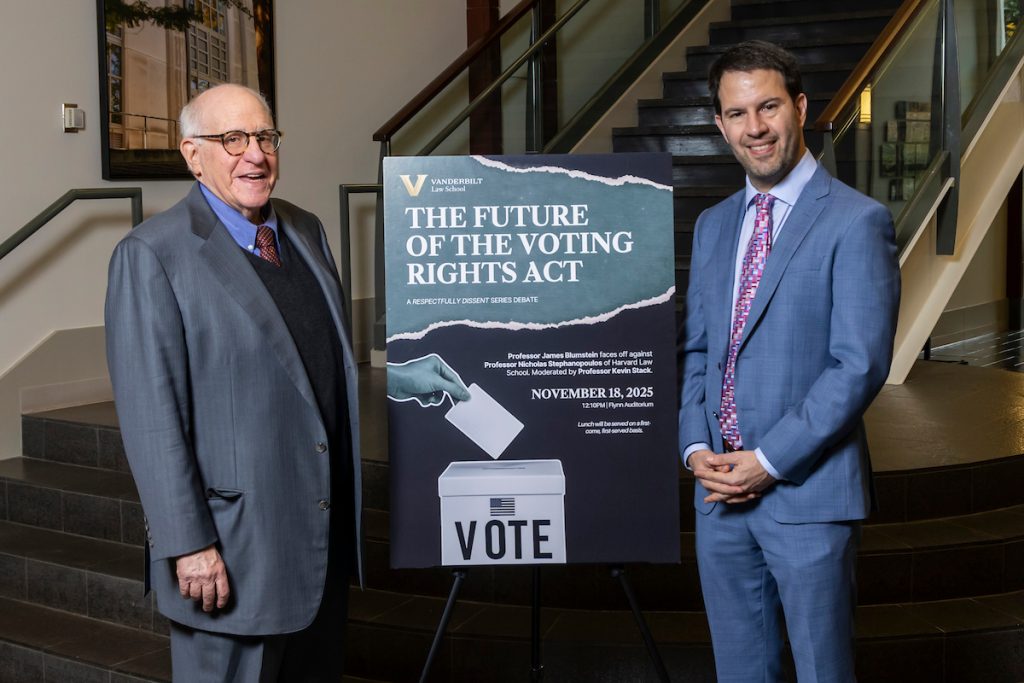
Last month, Vanderbilt Law School held the third debate in the Respectfully Dissent series, titled “Louisiana v. Callais and the Future of the Voting Rights Act.” The debate featured Nicholas Stephanopoulos, Kirkland & Ellis Professor of Law at Harvard Law School, facing off against James Blumstein, University Distinguished Professor of Constitutional Law and Health Law & Policy at Vanderbilt Law. Moderated by Kevin Stack, Lee S. and Charles A. Speir Chair in Law, the debate explored the competing interpretations of Section 2 of the Voting Rights Act, the unusual procedural posture of the Supreme Court’s pending decision in Louisiana v. Callais, and the constitutional boundaries of race-conscious districting.
Why is the Voting Rights Act a significant statute?
Professor Stack began by examining the historical role of the Voting Rights Act (VRA) of 1965, which prohibits racial discrimination in voting practices, noting that “many have described it as the most significant civil rights statute that’s been enacted.”
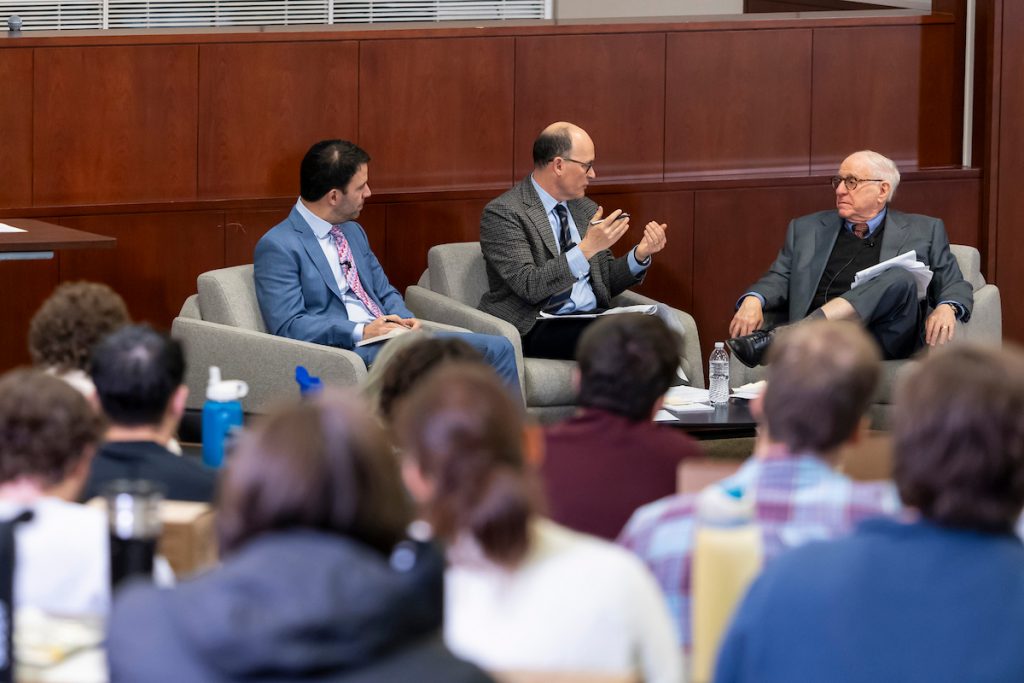
Professor Stephanopoulos explained that the VRA was enacted to dismantle Jim Crow policies that had systematically disenfranchised African-American voters across the South. He said the statute is “often labeled the crown jewel of the Civil Rights era and one of the great legislative achievements in American history.” Within just a few years, voter registration and turnout among Black citizens rose sharply; however, the widespread participation did not immediately translate into meaningful legislative representation.
Stephanopoulos divided the statute’s impact into two distinct stages. The first stage, in the 1960s and 1970s, targeted discriminatory barriers to voting and “quickly enabled the full participation of minority citizens in American elections,” he said. The second stage began after Congress amended the Act in 1982, after which “the VRA has fueled a much greater minority representation in Congress, the state legislatures, and in local governments across the country.”
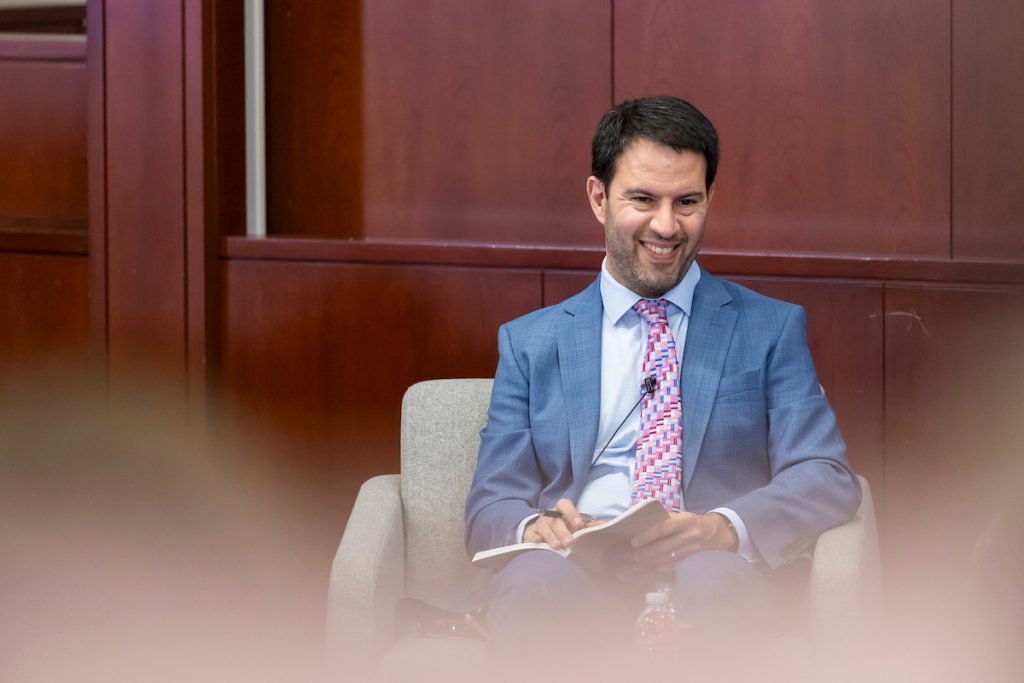
Professor Blumstein largely agreed with Stephanopoulos but emphasized that the VRA was enacted under the Fifteenth Amendment’s enforcement clause and therefore must be understood as a racial nondiscrimination statute, not an entitlement or guarantee of representative outcomes.
“That history is important to keep in mind, especially now that there are constitutional challenges to certain portions of the Voting Rights Act,” he said. “It’s a nondiscrimination law, not an entitlement to a particular portion of the vote or proportional representation.”
Why is the decision in Louisiana v. Callais crucial for the future of the Voting Rights Act?
Professor Stack outlined the trajectory of the VRA to explain why Louisiana v. Callais—a racial-gerrymandering case that does not directly present a Section 2 question—has become one of the term’s most consequential cases for the future of the Voting Rights Act.
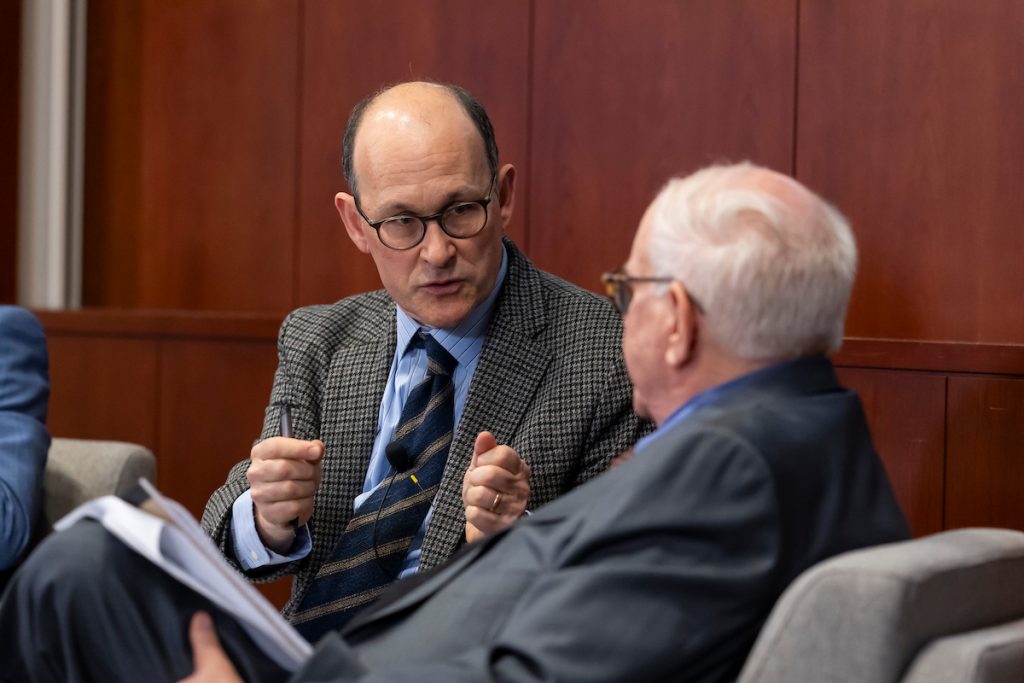 Over the past decade, the Supreme Court has significantly reshaped key provisions of the VRA, he explained. In Shelby County v. Holder (2013), the Court effectively disabled Section 5’s preclearance mechanism by striking down the Section 4(b) coverage formula, eliminating federal oversight of voting changes—including districting—in jurisdictions previously subject to preclearance. Later, in Brnovich v. Democratic National Committee (2021), the Court “significantly constrained the scope of Section 2, which pertains to access to voting,” Stack noted, signaling a more restrictive approach to interpreting the statute.
The Court is now addressing Louisiana v. Callais, a case that followed Louisiana’s initial enactment of a congressional map containing only one majority-Black district. That map was struck down under Section 2 by a federal district court, a ruling later affirmed on appeal. In response, the legislature produced a new map that included two majority-Black districts. It is this second map that is now before the Court in a separate racial-gerrymandering challenge.

Professor Stephanopoulos argued that “Callais should not be an important decision,” explaining that the case originally arrived at the Court as a straightforward racial-gerrymandering challenge, a type of Equal Protection claim the Court periodically hears. The only question presented was whether Louisiana’s Sixth District is an unconstitutional racial gerrymander. Resolving that question, Stephanopoulos argued, would not require the Court to revisit Section 2 or reconsider what the VRA demands. Therefore, the Court opened a debate that was not present when the case first reached its docket. “Section 2 only comes into play indirectly here,” he said, because the state drew the second map to comply with the earlier Section 2 injunction. Therefore, that earlier case, not Callais, would have been the proper vehicle to reconsider Section 2.
Stephanopoulos added, “There’s a real oddity in the Court maybe doing something monumental about Section 2 in what’s not a Section 2 case and where Section 2 is just the background factor that led to the creation of the district that’s now being challenged on other non-statutory grounds.”
Professor Blumstein explored the significance of Callais by questioning the limits of Section 2. He explained that ever since the Court recognized vote-dilution claims under Section 2 in 1986, scholars and courts have struggled to determine whether dilution is a freestanding results claim or whether it must be tied to process-based barriers that prevent minority voters from participating on equal grounds. He pointed to Chisom v. Roemer, a 1991 decision he calls “the case of the missing case,” which he believes correctly interprets Section 2 as a unitary, process-oriented nondiscrimination provision, not a results-driven guarantee of representational outcomes.
Blumstein argued that courts have not adequately grappled with Chisom, and Callais exposes the instability of the current doctrine. He emphasized that Louisiana drew the challenged district only because it believed a court would otherwise impose a map that disrupted Republican incumbents, and this highlights why Section 2’s current interpretation is in need of clarification.
How should Section 2 of the Voting Rights Act be interpreted?
The conversation then explored competing interpretations of the VRA, including whether vote dilution is a stand-alone Section 2 claim or whether it must be tied to an underlying barrier to political participation.
Professor Stephanopoulos defended the existing Thornburg v. Gingles (1985) framework, which has governed Section 2 vote-dilution cases for nearly 40 years. Under this structure, plaintiffs must satisfy three threshold “Gingles preconditions,” relating to the size, compactness, and political cohesion of the voting minority group in question. In Stephanopoulos’s view, this approach properly incorporates both participation and representation concerns, and he emphasized the strength of statutory stare decisis, adhering to precedent. Congress has repeatedly left the Gingles framework in place, and the Court reaffirmed it as recently as 2023 in Allen v. Milligan.
“Over the years, a reasonably appealing benchmark that’s neither proportional nor maximal representation for minority voters has emerged from this framework,” Stephanopoulos said. “So if voting is racially polarized, draw reasonably configured minority opportunity districts to the extent possible, but never exceeding proportional representation for the minority group.”
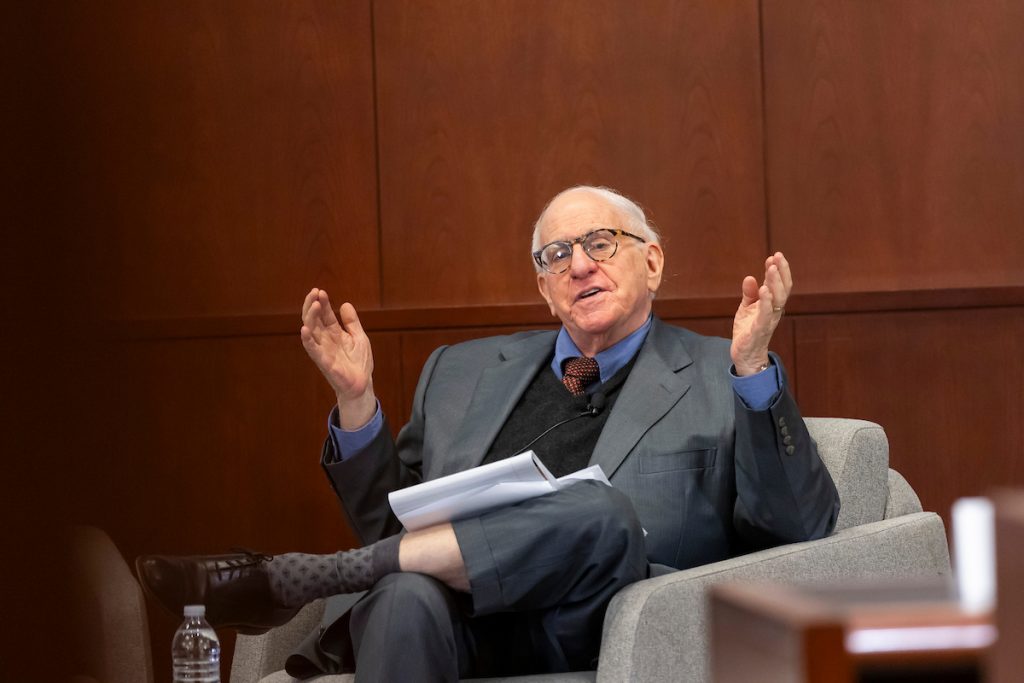
Professor Blumstein argued that Section 2 creates a unitary claim focused on openness of the political process. Therefore, vote dilution cannot be a free-standing results claim. Plaintiffs must show that the political process is not “equally open” and that this lack of openness causes minorities to be unable to elect their preferred candidates. Blumstein grounded this interpretation in the statutory text—particularly Section 2(b)—and in Chisom, which he believes clarifies that Section 2 is process-oriented rather than representational. He warned that the Gingles framework is “extra-textual” and risks drifting toward unconstitutional race-based entitlements.
“It doesn’t make sense to talk about dilution unless you have a view of what a non-diluted vote looks like, and the non-diluted vote would have to look a lot like racial proportionality or maximization of Black political influence, both of which are constitutionally problematic,” Blumstein expressed. “If the interpretation that Professor Stephanopoulos describes that includes a race-based benchmark is the one that’s actually adopted, then I think there’s a strong case that that will be unconstitutional.” He added, “I don’t think the Court should declare Section 2 unconstitutional, but I think it needs to have a proper interpretation to save its constitutionality, not to condemn it constitutionally.”
Should Section 2 expire or narrow over time as racial conditions improve?
Lastly, Professor Stack questioned whether race-conscious remedies such as Section 2 need a time limit or expiration placed on them. He asked, “Does Section 2 need a sunset kind of judicial check or not?” He drew parallels to recent Supreme Court decisions for Shelby County v. Holder and the affirmative action case Students for Fair Admissions v. Harvard, in which the Court held that race-based programs must have a clear endpoint.
Professor Stephanopoulos firmly rejected the idea that Section 2 requires an imposed time limit. He argued that Section 2 is race-conscious but not race-classifying. He also emphasized that the existing Gingles framework already functions as a built-in time limit. As residential segregation and racial polarization weaken, plaintiffs will naturally fail the Gingles preconditions, he noted, and inapplicable Section 2 claims will fail. These internal guardrails distinguish Section 2 from affirmative action or preclearance, making an added time limit unnecessary.
“Section 2 isn’t like the policies that have gotten time limits in the past,” he said. “That’s because what Section 2 is, fundamentally, just a disparate impact anti-discrimination statute, and the courts have never said that disparate impact laws are temporary or time-limited.”
He added, “Part of the genius of Section 2 is that it promotes minority representation without relying on racial classifications. It relies on race-related concepts like residential segregation and racially polarized voting, but those simply aren’t the same thing as race-based, racially classifying action.”
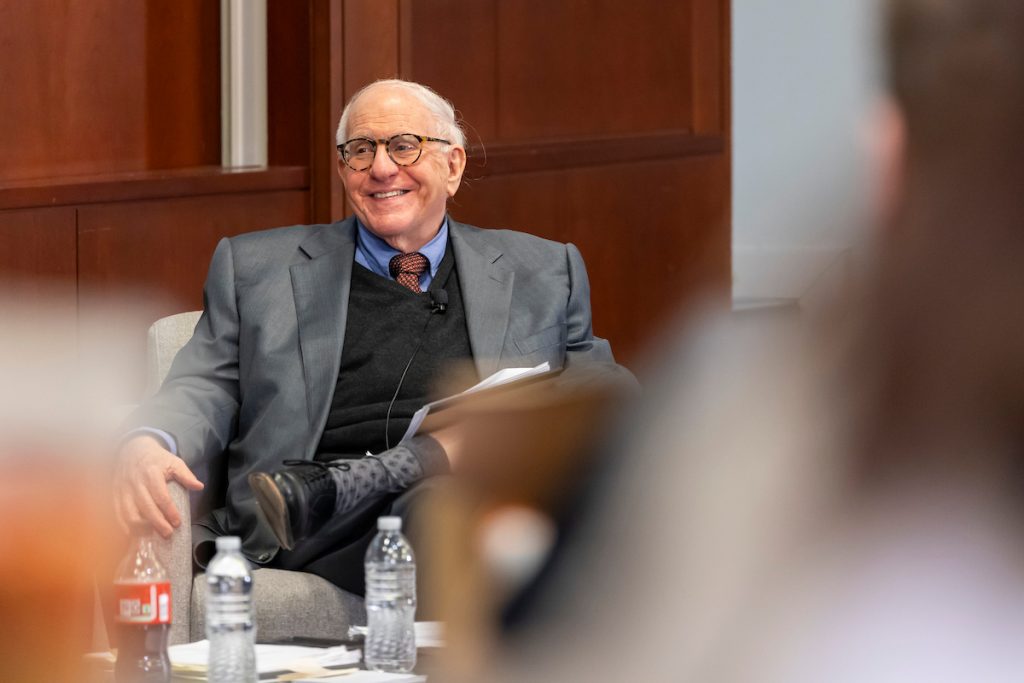
Professor Blumstein argued that whether a time limit is required depends entirely on how Section 2 is interpreted. If courts treat Section 2 as guaranteeing representational outcomes—such as requiring minority opportunity districts—then the statute begins to resemble the kind of race-based entitlement that triggers constitutional concerns and may require a time limit.
Blumstein himself views Section 2 as a process-based nondiscrimination statute intended to remedy barriers that prevent equal participation, not to mandate representational outcomes. Under that interpretation, he said, Section 2 already ends when the process failures are remedied, and no separate time limit is necessary. He believes that this approach preserves the constitutionality of Section 2 while preventing it from falling into race-based territory.
“If there’s no race-based entitlements, then there’s no issue about time limits,” he argued. “So my interpretation, which is the Chisom v. Roemer interpretation of the Voting Rights Act, is a process-oriented failure, and if there is exclusion from the process and that results in dilution of minority votes, then that’s actionable. But in a remedial context, you know what the time limit is when the remedy has been fully effectuated. You know what your target is.”
He closed with, “If it’s race-based, it’s race-based. If there’s a claim of entitlement based upon race, then that’s going to get strict scrutiny.”
Respectfully Dissent brings together experts in various fields of law to debate relevant issues in today’s legal climate. As the Supreme Court prepares to rule on Louisiana v. Callais later this term, the debate underscored the questions of interpretation and political representation at play for the future of the Voting Rights Act.
Watch the full lecture below or on our YouTube: