Vanderbilt Law hosted former Tennessee Governor Phil Bredesen for a conversation on bypassing polarization on energy issues. The event, part of The Private Sector and The Planet speaker series, was sponsored by the Private Climate Governance Lab (PCG); the Iowa Hubbell Environmental Law Initiative; Dialogue Vanderbilt; and Vanderbilt’s Center for Sustainability, Energy, and Climate (VSEC).
Moderated by Professor Michael Vandenbergh, David Daniels Allen Distinguished Chair in Law and Co-Director of the Energy, Environment & Land Use Program, Governor Bredesen discussed how leaders can bridge divides and find pragmatic, durable solutions that balance economic growth with environmental responsibility. Drawing on his experience in both the public and private sectors, he explored the role of collaboration, innovation, and bipartisanship in shaping an effective energy future.
Bredesen served as the 48th Governor of Tennessee from 2003 to 2011 and as Mayor of Nashville from 1991 to 1999, leading major reforms in healthcare, education, and economic development. Before entering public service, he worked in the private sector as an entrepreneur in the healthcare industry. Governor Bredesen is a co-founder of Silicon Ranch, one of the largest solar developers in the country.
Early Career and Political Foundations
Bredesen described an unconventional path into politics, beginning in science and transitioning through business before pursuing public service. A physics major at Harvard, he initially planned for an academic career, but his liberal arts education and the political atmosphere in the 1960s broadened his interests beyond the sciences. He worked in computing and emerging healthcare systems, where he founded and later sold a successful health insurance company before turning toward government work.
“When I graduated high school, I had zero interest or involvement in public service or the public sector, and I was going to be a professor of physics,” Bredesen said. “But you couldn’t be at Harvard in the 1960s with the Vietnam War beginning to escalate and not have a lot of politics around you.” He added, “I came to see politics and the kind of thing that Kennedy was doing as an honorable thing to do…I always thought it was something that I’d like to do someday.”
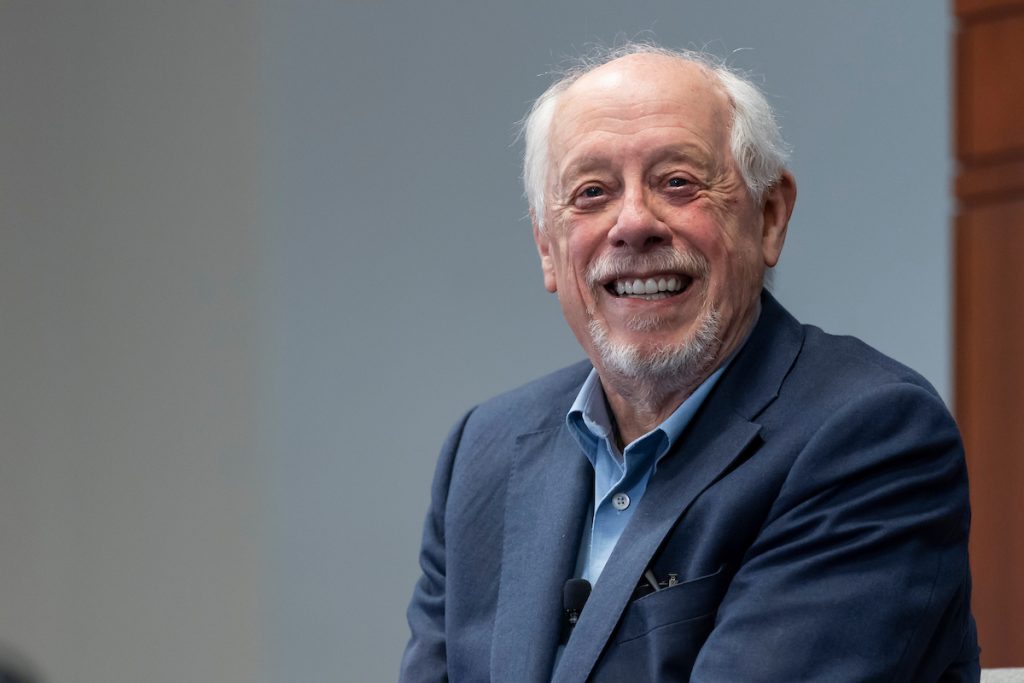 Bredesen first became involved in politics through Senator Eugene McCarthy’s 1968 presidential campaign. He ran unsuccessfully for the Massachusetts State Senate in 1969 and later, after moving to Tennessee, ran for both Nashville mayor and the U.S. House of Representatives in 1987, losing both contests. Undeterred, Bredesen won the Nashville mayoral election in 1991, serving two terms followed by two terms as Governor of Tennessee.
“I certainly think that whether it’s in politics or anything else,” he said, “that kind of persistence to take some failures and just keep pushing on and not be discouraged from it is an important characteristic.”
A Rational Approach to Energy Reform
Bredesen described his approach to environmental and energy policy as pragmatic, an outlook he said is essential to building bipartisan support for durable reform. As mayor and governor, he expanded Tennessee’s park system and placed large tracts of land under public ownership to preserve them from future development. Now at Silicon Ranch, he focuses on meeting rising demand for renewable energy while promoting economic growth in rural communities.
“I’ve always considered myself an environmentalist in a kind of rural American sense,” he said. “For me, environmentalism was not just climate change—it was species preservation, planting trees and planting hedgerows, making wildlife habitat, and keeping watersheds clean.”
He argued that solar energy represents the most practical and cost-effective pathway for meeting U.S. electricity needs while reducing emissions. “Solar is today as cheap as it gets for the new generation,” he said, adding that even without federal subsidies, companies such as Meta, Amazon, and Microsoft would continue investing in renewables because of the expectations of their employees and the increasing energy demands of data centers and electric vehicles. 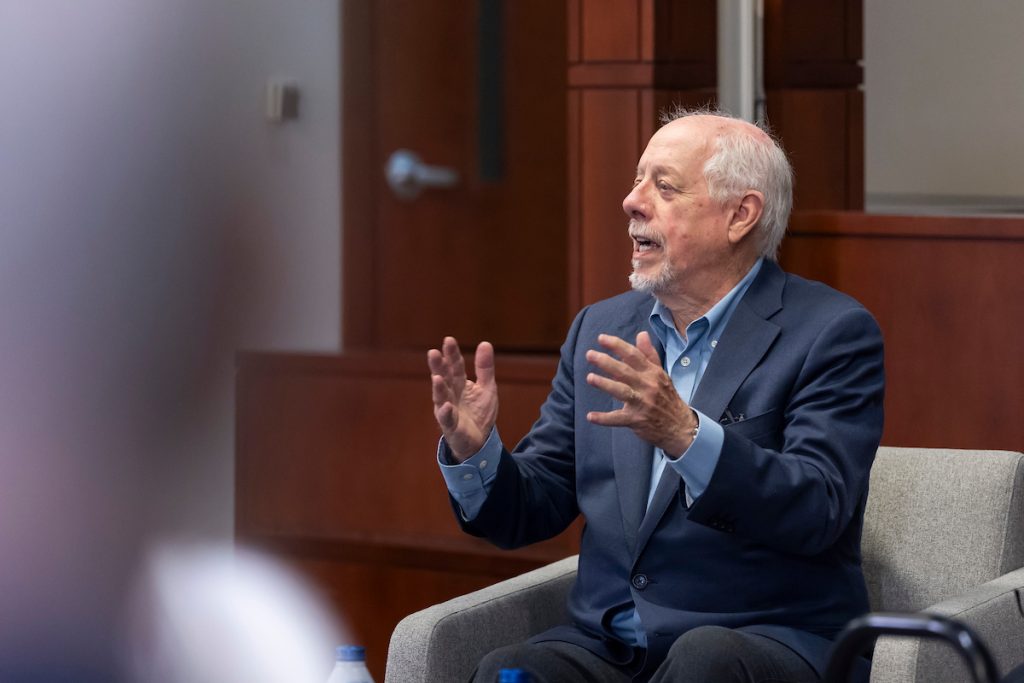
The most significant barrier to clean-energy expansion is permitting, Bredesen said. A new solar project can take up to four years to bring online—three years for permitting and one for construction—because existing regulatory frameworks were designed for large fossil fuel and nuclear plants rather than distributed renewable systems that can be built much faster. Streamlining approvals, adequately staffing agencies, and modernizing interconnection standards, he argued, would do more to advance renewable energy than new subsidies.
“Changing the permitting process and staffing it correctly so you can get things resolved would be a huge step forward,” Bredesen said.
Navigating Bipartisan Solutions
Bredesen argued that durable policy emerges from blending liberal and conservative ideas to achieve balanced, lasting outcomes. He credited his background in physics for shaping a governance approach rooted in problem-solving rather than performance. “The right solution is usually some combination of liberal and conservative views about things,” and the challenge lies in “figuring out how you incorporate both and bring people along,” he noted.
Bredesen emphasized the value of pursuing a middle ground, where environmental and economic goals align. “If you build a big solar array in a county, it instantly becomes the biggest taxpayer in that county,” he noted. “People from all parts of the political spectrum respect that.”
He argued that effective messaging for bipartisan climate policy requires acknowledging the differing life circumstances of constituents, and he criticized how some climate advocacy has become detached from the everyday economic concerns of working-class Americans.
“I think one of the problems is that people who believe in climate change and believe that we need to do things to fix it have approached it in a way that’s not sensitive to the lives that a lot of other people are living,” he said. “You have a whole bunch of people who are young, college-educated, and have everything going well in life—they have health insurance, they’re secure financially, and they don’t care what a gallon of gasoline costs—telling a whole bunch of other people what they need to sacrifice because of climate change, people who do care a lot about what a gallon of gasoline costs.”
Bredesen expressed that academia plays a crucial role in reframing these conversations. Scholars “have so much to offer in thinking through complex issues,” he noted. Their impact depends on engaging with and representing people from varied lived experiences. “Until we can get more sophisticated about the way we present these views,” he said, “I think we’ll continue to be unsuccessful.”
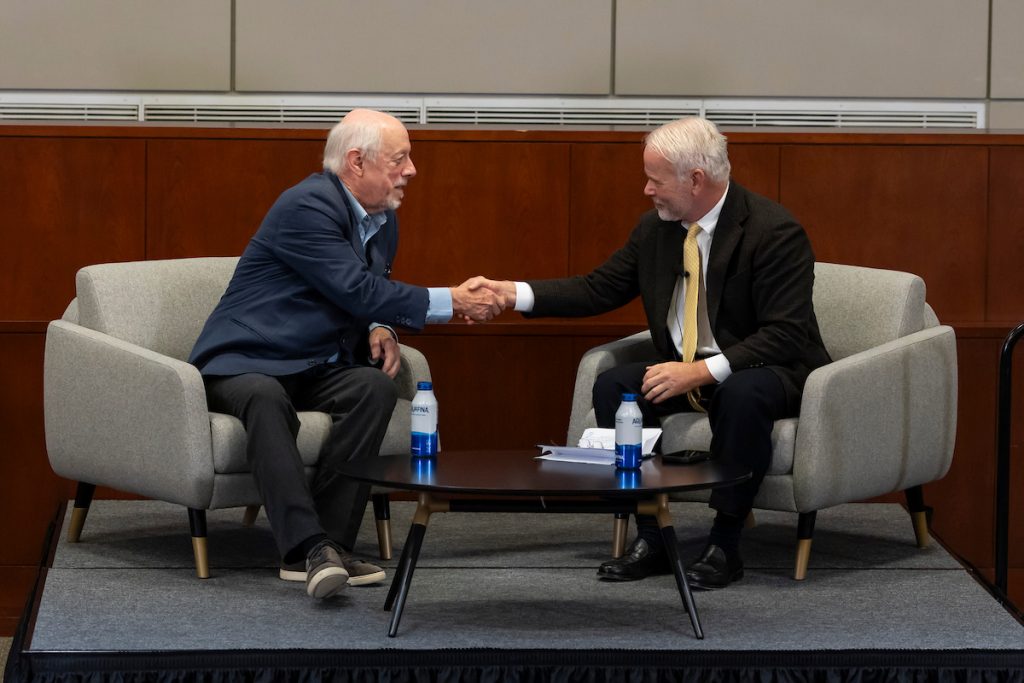 Vandenbergh noted that invoking shared, overarching identities can sometimes bridge those divides. He highlighted studies showing that people often reject policies not because they deny the underlying problem, but because they anticipate disliking the solution, a phenomenon called “solution aversion.” When climate responses are framed as private-sector innovation rather than government regulation, public support tends to rise across the political spectrum. “What’s fascinating is that both conservatives and liberals are interested more in climate problems and climate solutions when they think that the answer is that kind of response,” Vandenbergh said.
Bredesen urged students to engage beyond their immediate circles, reminding them that “everyone lives in a bubble,” and encouraging them to be intentional about getting information from outside of that bubble.
“I think a part of the genius of the invention of this country and the Constitution is the recognition that people are not going to agree, and they’re going to fundamentally disagree on a lot of things,” Bredesen said. “But it provides a path for working through those differences to have a successful society that’s able to deal with the issues they face and make opportunities for people within it.”
Watch the full lecture below or on our YouTube channel: